Essay · 2026
Enterprise Experience Is the Missing Ingredient
Decades of enterprise experience is the ingredient most agentic AI teams are missing: the hard-won skills of coordinating complex delivery, wiring capability into a messy legacy stack, and demanding explicit rigor are exactly what turn an impressive demo into a system that survives enterprise reality, because the real bottleneck is trust, not tech.
Decades of enterprise complexity aren't just relevant to the agentic stack: they're the part most teams are missing.
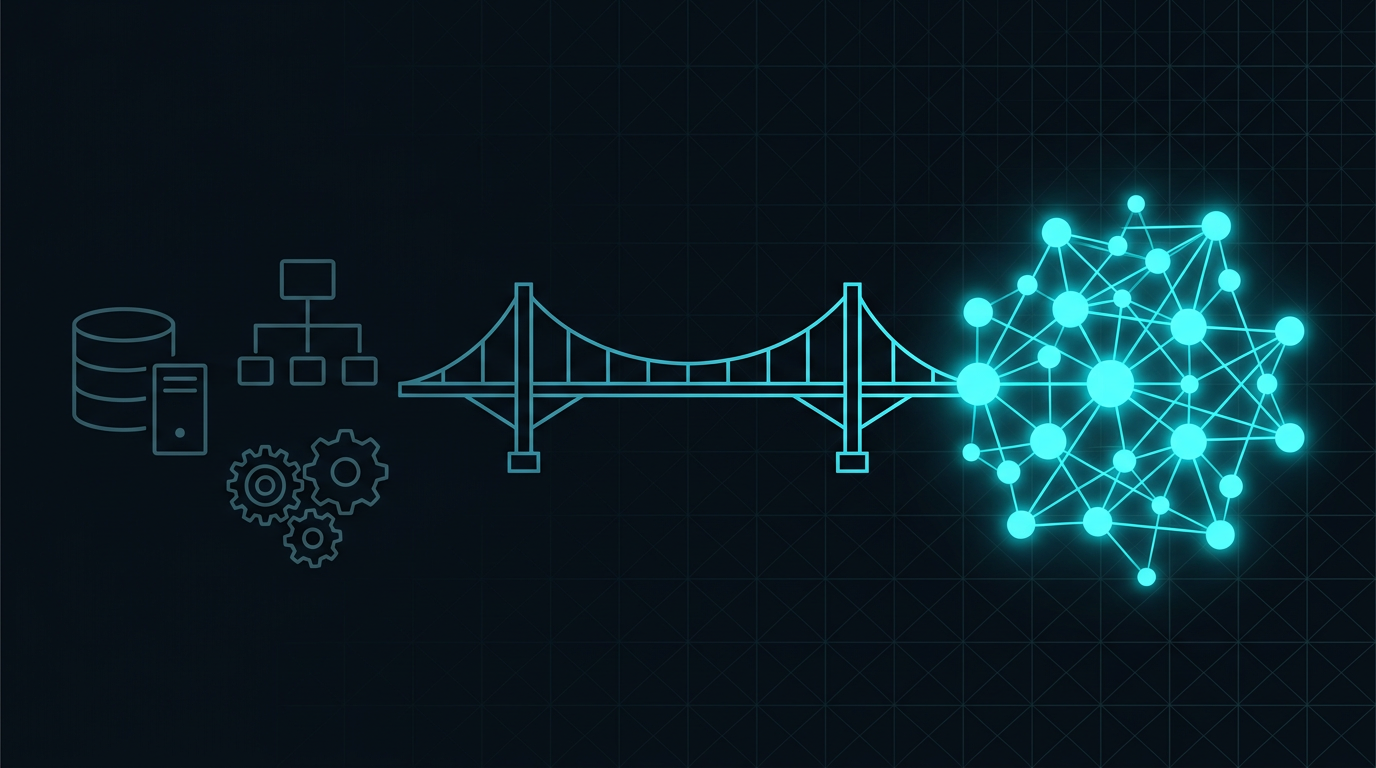
I spent much of my career in the familiar world of CRM integrations, reference data management, and complex multi-system workflows. It's important work, but after two decades, you start to feel like you've seen the patterns before.
The last few months have been different. I've been building systems where specialized AI agents collaborate on enterprise delivery, and time and time again I find myself leveraging hard-won knowledge and skills, many earned with battle scars.
It turns out that decades of enterprise experience isn't just relevant, it seems to be a missing ingredient in much of the agentic hype.
Here's what I've realized:
Managing Agents Is Just Managing, But Faster
Getting a dozen agents to coordinate without stepping on each other is similar to managing a human team. You need clear roles and responsibilities, shared context (not just "here's a ticket, complete it then move on"), continual crystal-clear communication, and a protocol for escalation. If you know how to lead a complex project, you already know how to manage an agent system. But now your team finishes a week's worth of work in an hour, so you have to switch context constantly. The art of plate spinning.
The "Enterprise Reality" Gap Is Real
There is a wave of talented AI engineers building incredible demos right now. But a demo doesn't have to deal with Salesforce governor limits, PRDs still being written and approved in meetings before being broken down into Jira tickets with incomplete acceptance criteria, or the fact that Confluence is rarely the "source of truth" it claims to be. The value isn't just in the AI model itself; it's in connecting that capability to the messy, political, and technical realities of a legacy stack.
Agents Force a Level of Rigor I Wish I'd Demanded Years Ago
When AI agents are doing the work, "implicit" knowledge doesn't exist. Everything must be explicit. Every decision must be documented, and every pattern must be codified. We like to say "more time at the whiteboard = less time at the keyboard"; it's the same concept with agents, but now you can go deeper and pressure test against many more architectures and best practices.
The Bottleneck Is Trust, Not Tech
If you can define it and design it clearly, you can build it. The playing field is leveled. But organizational change is still a significant challenge. Getting a team to let agents contribute to a production pipeline with real accountability is a cultural hurdle. It requires governance that works in practice, not just in theory.
This has been the most rewarding stretch of my career since the early dot-com days. It feels like we're finally building systems that can handle the complexity we've been managing manually for decades. Creativity is foundational again. I can personally do the soup and the nuts. I'm having a blast.
If you're working at this same intersection of old-school enterprise and the new agentic stack, I'd love to compare notes.
← All writing